Investigation-focused starship puzzle with morally fraught decisions
Processes incoming ship manifests, hull scans, and comms while juggling corrupted data and frequency fixes, placing you at a security desk. Contact Protocol, from Cold Zephyr Games, blends investigative puzzle loops with narrative choices that alter endings. The game pairs data-checking mechanics, a cassette-future CRT art style, and timed multitasking to test pattern recognition and ethical judgement. It suits players who like tense, job-sim puzzles and story outcomes tied to in-play decisions.
What kind of game asks you to act as a shipboard security officer?
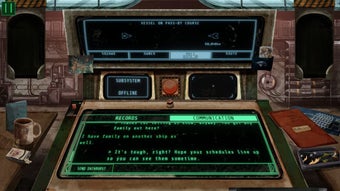
In this game, you perform a starship job simulator that centers on cross-referencing records and deciding who boards the vessel. The core loop requires comparing incoming data bursts, hull images, and communication logs against corporate records, then marking vessels pass or fail. That loop echoes checkpoint-style job sims while focusing on verification work and cognitive throughput under time pressure, with choices feeding into multiple possible endings.
How the mechanics force multitasking and investigation under pressure
In this game, mechanics layer tasks: you recover corrupted data, fix contact frequencies, and monitor incoming communications at once. Multi-tasking challenges present simultaneous mini‑puzzles rather than a single puzzle thread. The interface routes you between logs and images; success depends on accurate cross-referencing and rapid decision timing. Moral decisions are integrated into the same systems, so investigative accuracy and ethical judgement occupy the same play space.
What the game looks and sounds like aboard the Pale Horse
In this game, presentation uses a cassette-future aesthetic with CRT monitor visuals and hand-drawn art. The visual design creates a gritty, lo‑fi sci-fi atmosphere that frames corporate surveillance work. Audio and UI emphasise clipped comms and diagnostic blips, reinforcing the job-desk rhythm. The art and sound style supports the narrative tone rather than flashy spectacle, matching the investigative, document-focused gameplay.
How difficulty, progression, and replayability shape the experience
In this game, progression and endings respond to moral choices and performance in the data-checking puzzles. The title ties player decisions to different narrative outcomes, so replayability comes from exploring alternative choices and routes. The demo's positive reception on Steam, at 100% positive, indicates that early players found the pacing and decision stakes engaging. However, the design keeps focus on tight session loops built around verification and consequence.
Contact Protocol rewards players who enjoy tense, systems-driven moral puzzles
The game is a focused investigative puzzle experience for players who prefer verification work and ethical dilemmas over action. Its cassette-future presentation and data-heavy mini‑tasks create a persistent sense of surveillance and corporate pressure. Players seeking narrative branching tied to in-play decisions and high cognitive load will find the design purposeful; those who want broader mechanical variety may find the scope deliberately narrow.